
Petrol and Diesel Price Increase in Pakistan 2026
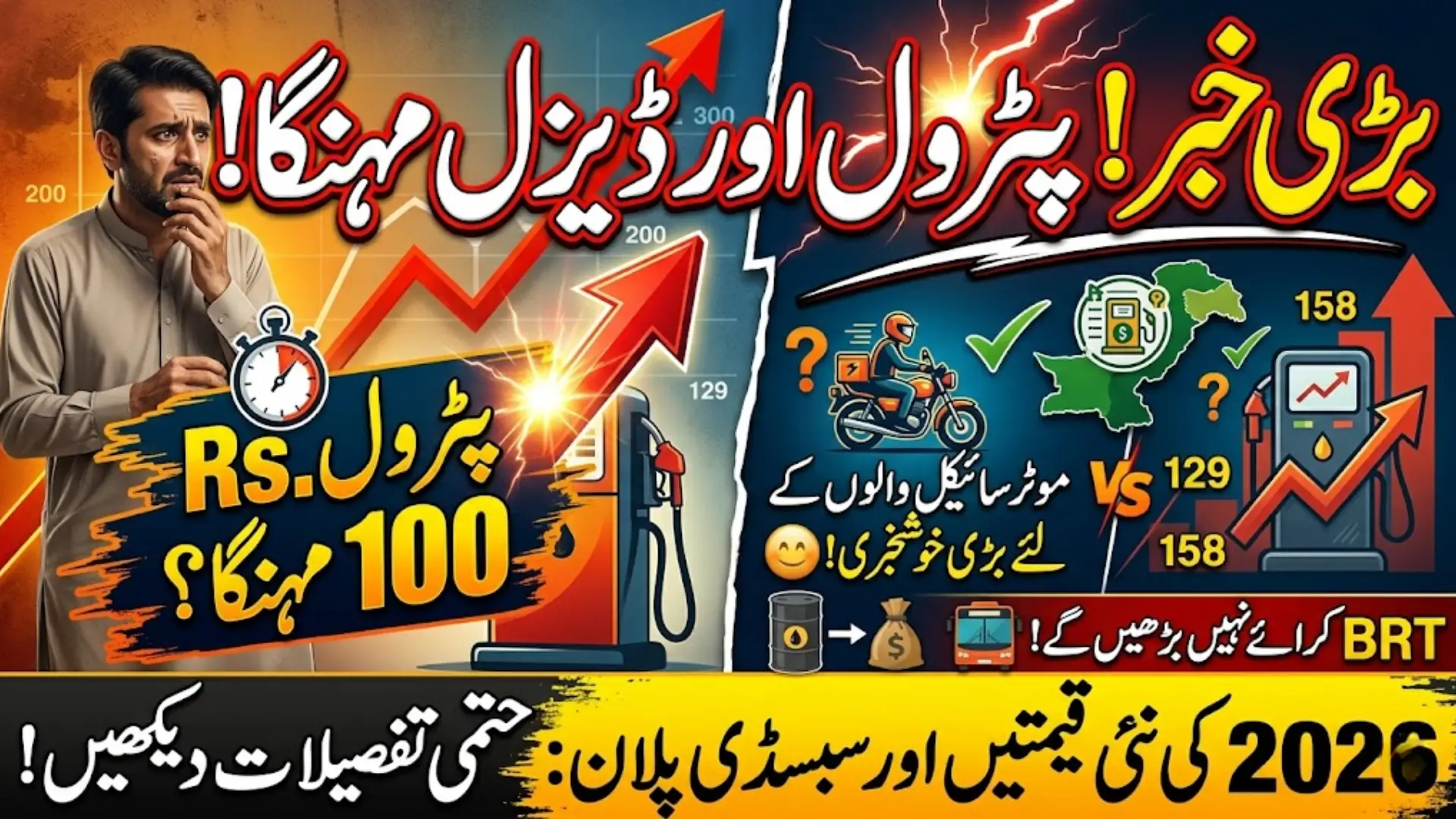
Petrol and Diesel Price Increase in Pakistan 2026 is expected within the coming days as the government prepares to adjust fuel prices in response to rising global oil costs. This move is part of a broader strategy to reduce the financial burden on the national budget while gradually passing import costs to consumers. Fuel pricing has always been a sensitive issue in Pakistan, and any increase directly affects daily life and economic activity.
The government is trying to strike a balance between increasing prices and providing relief to vulnerable groups. Instead of a sudden and full increase, authorities are considering a partial adjustment combined with targeted subsidies. This approach aims to protect low-income citizens while managing fiscal pressure.
- Expected price hike in coming days
- Linked with international oil prices
- Partial cost transfer to consumers
- Focus on balanced economic approach
You Can Also Read: Latest Updates: Vivo V40 5G Smart Phone Price in Pakistan, Specs & Full Review
Expected Petrol and Diesel Rates in Pakistan 2026
The expected Petrol and Diesel Rates in Pakistan 2026 are based on the current gap between local prices and import-adjusted costs. Officials estimate that petrol prices are lower by around Rs. 100 per litre, while diesel prices have a gap of more than Rs. 200 per litre.
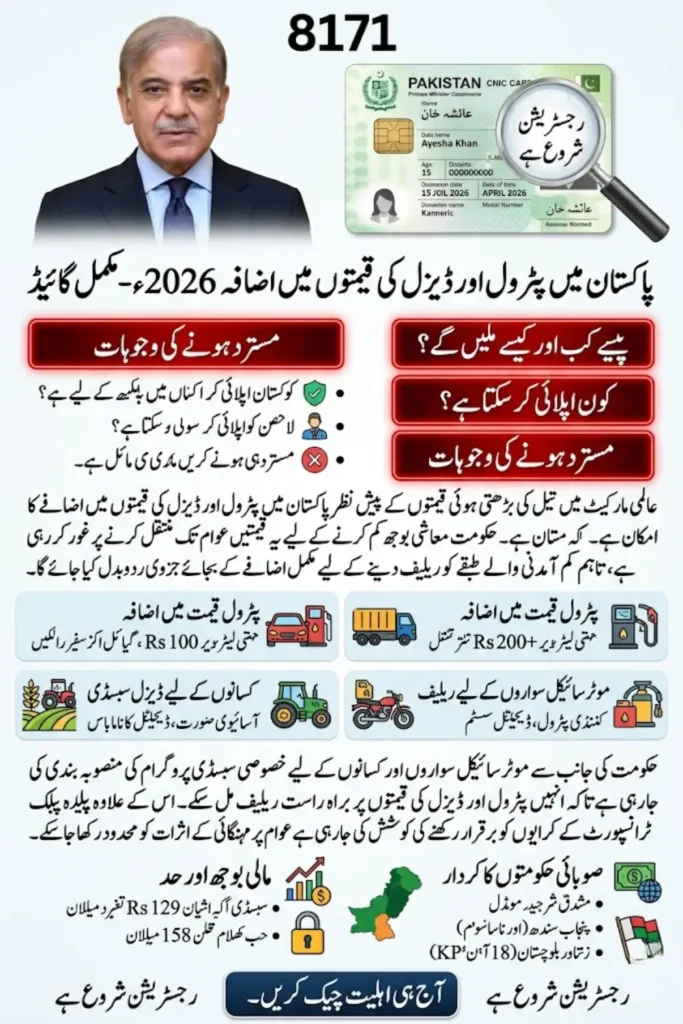
Authorities are likely to pass the full petrol price difference to consumers, while only about half of the diesel gap may be implemented. Final prices will be confirmed after calculations by relevant departments, including regulatory authorities.
| Fuel Type | Current Gap | Expected Adjustment |
|---|---|---|
| Petrol | ~Rs. 100/litre | Full increase likely |
| Diesel | ~Rs. 200+/litre | Partial increase expected |
- Petrol increase may be higher
- Diesel increase likely controlled
- Final rates yet to be announced
- Based on updated calculations
You Can Also Read: Latest Updates: BISP NSER Survey 2026 – Complete Guide for Registration, Eligibility, and CNIC Check
Government Subsidy Plan for Fuel Prices 2026
The Government Subsidy Plan for Fuel Prices 2026 focuses on targeted relief instead of universal subsidies. This means only specific groups will receive support, helping the government reduce unnecessary spending while still protecting those in need.
This plan includes subsidies for motorcyclists and farmers, who are among the most affected by rising fuel costs. By focusing on these groups, the government aims to minimize the impact on essential sectors such as transportation and agriculture.
- Targeted subsidy approach
- Relief for motorcyclists
- Support for farmers
- Reduced overall fiscal burden
You Can Also Read: BISP April Payment Schedule 2026 – 8171 CNIC Check, Eligibility and Complete Guide
Role of Federal and Provincial Governments in Subsidy Distribution
The federal government has asked provincial administrations to share the burden of fuel subsidies. This decision was made after consultations with top leadership, including discussions at the national level to ensure coordinated efforts.
Punjab and Sindh are expected to contribute based on population size, while Khyber Pakhtunkhwa and Balochistan will share responsibility according to fuel consumption. This model ensures fair distribution of financial responsibility across provinces.
- Shared responsibility model
- Punjab and Sindh by population
- KP and Balochistan by consumption
- Coordination between governments
You Can Also Read: Punjab E-Bike Scheme 2026 – Online Registration, Eligibility and Installment Plan for Students
Financial Impact of Fuel Subsidies in Pakistan
Fuel subsidies have already placed a significant burden on the national budget. The government has spent approximately Rs. 129 billion in recent weeks and plans to cap total subsidies at around Rs. 158 billion.
Weekly subsidy requirements are estimated between Rs. 15 billion and Rs. 18 billion, which may increase further depending on global oil trends. This highlights the challenge of maintaining subsidies while managing economic stability.
| Category | Estimated Amount |
|---|---|
| Subsidy spent | Rs. 129 billion |
| Planned cap | Rs. 158 billion |
| Weekly requirement | Rs. 15–18 billion |
- High financial pressure on government
- Subsidy cap introduced
- Weekly costs rising
- Dependent on oil market trends
You Can Also Read: Jaecoo J5 Price in Pakistan 2026 – Specs, Features, Fuel Average and Full Details
Impact of Diesel Price Increase on Inflation
Diesel prices have a direct impact on transportation and logistics, making them a key factor in inflation. An increase in diesel rates can raise freight costs, which eventually leads to higher prices for essential goods, including food items.
The government is aware of this risk and is carefully managing diesel price adjustments. By limiting the increase, authorities aim to control inflation and prevent additional economic pressure on citizens.
- Diesel affects transport sector
- Leads to higher food prices
- Government aims to limit impact
- Important for inflation control
Special Relief Programs for Motorcyclists and Farmers
To reduce the burden of rising fuel prices, the government is planning special relief programs. Motorcyclists are expected to receive subsidized petrol through a controlled system, which will help daily commuters manage expenses.
Farmers will benefit from diesel subsidies, particularly through digital systems such as agricultural databases. Provinces are working on implementing similar programs to ensure that relief reaches the intended beneficiaries.
- Petrol subsidy for motorcyclists
- Diesel support for farmers
- Use of digital systems
- Expansion across provinces
You Can Also Read: CM Punjab Solar Panel Program 8800 Status Check Using Consumer ID – Complete Guide 2026
Public Transport and BRT Fare Policy
Despite the expected fuel price increase, authorities have decided not to raise fares for Bus Rapid Transit systems. This decision is aimed at protecting urban commuters from additional financial burden.
However, maintaining fixed fares may create differences in pricing compared to other transport systems. This could lead to challenges in areas where public transport options are limited.
- BRT fares remain unchanged
- Relief for city commuters
- Risk of fare imbalance
- Policy under review
Future Outlook of Fuel Prices in Pakistan
The future outlook of fuel prices in Pakistan depends largely on global oil market conditions. Any increase or decrease in international prices will directly affect local fuel rates.
The government is working on long-term reforms to stabilize fuel pricing and reduce dependency on subsidies. However, uncertainty in global energy markets continues to pose challenges.
- Dependent on global oil prices
- Long-term reforms planned
- Economic pressure remains
- Market uncertainty continues
You Can Also Read: New Mandatory Primary School Timings in Khyber Pakhtunkhwa 2026 – Complete Schedule and Policy Details
Final Thoughts on Petrol and Diesel Price Increase in Pakistan 2026
The Petrol and Diesel Price Increase in Pakistan 2026 reflects the economic realities faced by the country. While the government is trying to manage costs and provide relief, rising global prices make the situation complex.
Targeted subsidies and shared responsibility between federal and provincial governments offer a balanced approach. Careful implementation of these policies will be crucial to maintaining economic stability and protecting citizens.
- Complex economic situation
- Balanced policy approach
- Targeted relief measures
- Need for effective implementation
You Can Also Read: BISE Lahore 9th Class Roll Number Slip 2026 Download – Exam Date and Complete Details
FAQs
What is the reason behind petrol price increase in Pakistan 2026?
The increase is due to rising global oil prices and higher import costs.
How much will diesel prices increase in Pakistan?
Diesel prices may increase partially, depending on final government decisions.
Who will benefit from fuel subsidies in Pakistan?
Motorcyclists and farmers are expected to receive targeted subsidies.
Will public transport fares increase after fuel price hike?
BRT fares will remain unchanged, but other transport costs may rise.
You Can Also Read: BYD Pakistan Free 7kW Charger Offer 2026 – Electric Vehicle Deal, Details and Charging Benefits