

Introduction to KP Digital Payment Act 2026
The KP Digital Payment Act 2026 marks an important step by the government of Khyber Pakhtunkhwa toward modernizing its financial system. The proposed law has been introduced in the provincial assembly with the aim of promoting digital transactions and reducing dependence on cash. This initiative reflects a broader effort to align the province with global financial trends.
The bill was presented by Provincial Law Minister Aftab Alam, highlighting the government’s commitment to digital transformation. By encouraging electronic payments, authorities aim to make financial processes more efficient, transparent, and accessible for both businesses and consumers.
- Introduced in KP provincial assembly
- Focus on digital economy growth
- Promotes cashless transactions
You Can Also Read: 9999 Online Check 10000 – Complete Guide to Check Eligibility in Pakistan
Objectives of KP Digital Payment Act 2026
The primary objective of the KP Digital Payment Act 2026 is to expand the use of digital financial systems across the province. The government aims to create a structured framework that supports safe and reliable electronic transactions for daily use.
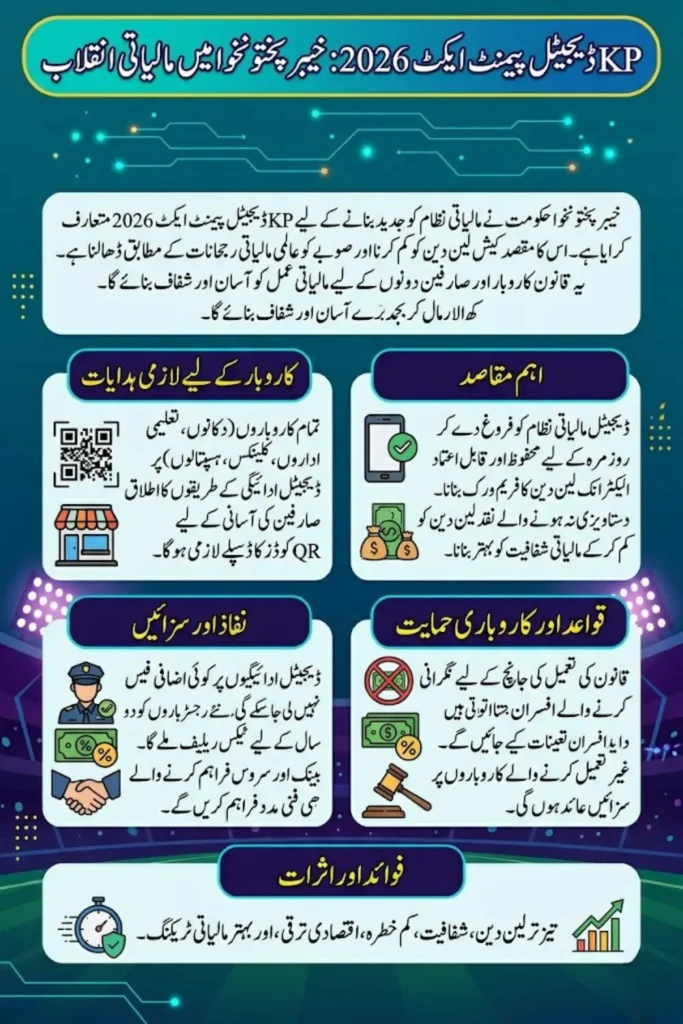
Another key goal is to improve financial transparency by reducing undocumented cash transactions. This shift is expected to strengthen accountability and support better economic planning.
- Promote digital financial systems
- Encourage cashless payments
- Improve financial transparency
The initiative also aims to simplify everyday transactions, making them faster and more secure for users.
You Can Also Read: Gold Prices Pakistan Drop Nearly Rs. 50,000 – Latest Rates, Global Market Impact & Full Price List
Mandatory Digital Payments for Businesses
Under the KP Digital Payment Act 2026, all businesses will be required to adopt digital payment methods. This includes shops, commercial outlets, educational institutions, clinics, and hospitals, ensuring wide coverage across sectors.
Businesses will also need to display QR codes to facilitate easy electronic payments. This requirement is expected to make transactions more convenient for customers while improving record-keeping for businesses.
- Applies to all types of businesses
- QR code display is mandatory
- Covers public and private sectors
| Business Type | Requirement |
|---|---|
| Shops & Outlets | Digital payment system |
| Schools & Colleges | QR code payments |
| Clinics & Hospitals | Electronic transactions |
This broad implementation will help standardize digital payment practices across the province.
You Can Also Read: PSER Online Registration 2026 Open Now – 8070 Ramzan Package 2026 Apply Online & Check Status
Rules on Digital Payment Charges
The KP Digital Payment Act 2026 clearly states that businesses are not allowed to charge extra fees for digital payments. This rule is designed to protect consumers and encourage them to use electronic payment methods without hesitation.
By removing additional costs, the government aims to build trust in digital systems. This approach ensures fairness and prevents businesses from discouraging customers from using cashless options.
- No extra charges allowed
- Protects consumer rights
- Encourages digital adoption
This policy is expected to increase the use of digital payments among the general public.
Monitoring and Enforcement Mechanism
To ensure proper implementation, the KP Digital Payment Act 2026 includes a monitoring system. Authorized officers will be appointed to inspect business premises and verify compliance with the law.
These inspections will help identify businesses that are not following the rules and ensure that corrective actions are taken. This structured approach will strengthen the effectiveness of the policy.
- Monitoring officers assigned
- Inspections at business locations
- Ensures rule compliance
The enforcement mechanism plays a key role in maintaining discipline and consistency across all sectors.
You Can Also Read: JMEV EV3 Pakistan 2026 – Price, Specifications, Booking Details, and Full Comparison Guide
Penalties for Non-Compliance
The KP Digital Payment Act 2026 proposes penalties for businesses that fail to adopt digital payment systems. These penalties are intended to ensure that all businesses take the law seriously and comply with its requirements.
Strict enforcement will discourage violations and promote a culture of accountability. Businesses will need to follow the rules to avoid legal consequences and maintain smooth operations.
- Penalties for rule violations
- Encourages compliance
- Supports fair implementation
This approach ensures that the law is applied equally across all businesses.
Tax Relief and Business Support
To support businesses during the transition, the government has announced tax relief for newly registered businesses. These businesses will benefit from a two-year tax exemption, making it easier for them to adopt digital systems.
This financial support is particularly helpful for small and medium enterprises that may face challenges in adopting new technology. It encourages businesses to embrace digital transformation without financial pressure.
- Two-year tax relief for new businesses
- Supports small enterprises
- Encourages digital adoption
| Support Type | Benefit |
|---|---|
| Tax Relief | 2 years exemption |
| Financial Support | Reduced burden |
| Adoption Incentive | Easier transition |
These incentives are designed to make the shift to digital payments smooth and practical.
You Can Also Read: BSEK E-Answerbook Introduced for Class 9 Science and Selected Class 10 Papers
Role of Banks and Service Providers
Banks and service providers will play a crucial role in implementing the KP Digital Payment Act 2026. They are responsible for providing technical assistance to businesses and helping them set up digital payment systems.
This support includes training, system installation, and ongoing guidance. By working closely with businesses, banks can ensure a smooth transition to digital transactions.
- Provide technical assistance
- Help set up payment systems
- Offer ongoing support
Their involvement ensures that businesses have the resources needed to adopt the new system effectively.
Benefits of KP Digital Payment Act 2026
The KP Digital Payment Act 2026 offers several benefits for both consumers and businesses. Digital payments simplify transactions, reduce the need for physical cash, and improve efficiency in daily operations.
Additionally, the use of electronic systems enhances transparency and reduces the risk of fraud. This creates a more secure and reliable financial environment.
- Faster transactions
- Reduced cash handling
- Improved transparency
These advantages contribute to a stronger and more organized economy.
You Can Also Read: Ramzan Negahban Card 2026 – Apply Online, Eligibility, PSER Registration
Impact on Consumers and Businesses
The KP Digital Payment Act 2026 is expected to have a positive impact on consumers by making payments more convenient and accessible. Customers will be able to pay quickly using QR codes and digital methods.
For businesses, the law provides better record-keeping and improved financial management. This helps in tracking transactions and maintaining accurate accounts.
- Convenient payment options for users
- Better financial tracking for businesses
- Supports economic growth
The combined impact will strengthen the overall financial ecosystem in the province.
You Can Also Read: JMEV EV3 Price in Pakistan 2026 – Capital Smart Motors Launches New Electric Hatchback
Conclusion
The KP Digital Payment Act 2026 represents a major step toward building a cashless economy in Khyber Pakhtunkhwa. By making digital payments mandatory and providing support to businesses, the government is creating a modern financial system.
With proper implementation and cooperation from all stakeholders, this initiative can transform how transactions are conducted. It will not only benefit businesses and consumers but also contribute to long-term economic development.
FAQs
What is the KP Digital Payment Act 2026?
It is a proposed law to promote digital payments and reduce cash usage in Khyber Pakhtunkhwa. It aims to improve transparency and efficiency.
Who must adopt digital payment systems?
All businesses, including shops, schools, clinics, and hospitals, are required to use digital payments. QR codes must also be displayed.
Are extra charges allowed on digital payments?
No, businesses are not allowed to charge extra fees for digital transactions. This rule protects consumers.
What support is provided to businesses?
New businesses receive two-year tax relief, and banks provide technical assistance. This helps in smooth adoption of digital systems.
You Can Also Read: RawalPindiz PSL 11 Performance: Rizwan Hopes Karachi Leg Brings Turnaround After Losing Streak